|
|
Last Modified on Oct 23, 2026
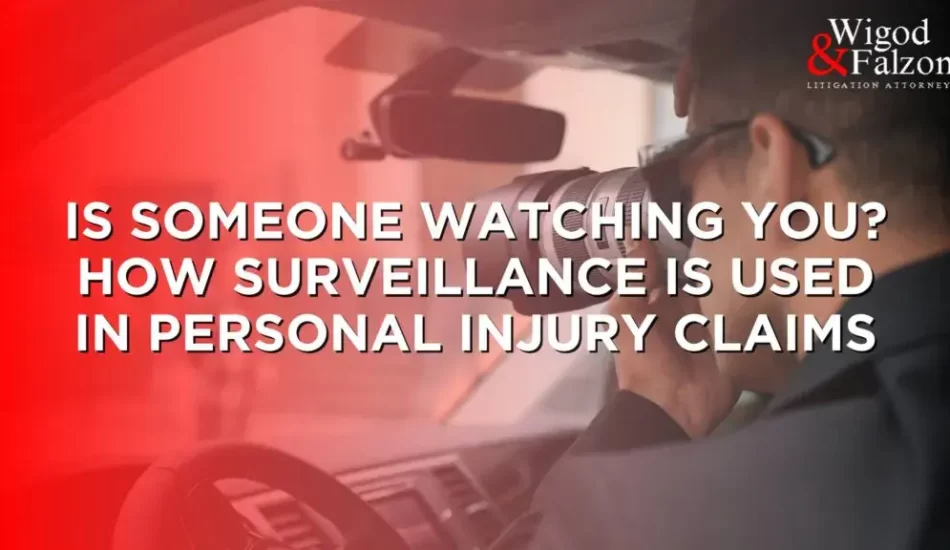
You may not realize it, but surveillance cameras are nearly everywhere in public places—grocery stores, banks, parking lots, and even on the road. However, surveillance can even go as far as monitoring public conversations or social media use—and are often conducted in personal injury claims. It’s important to understand how surveillance is used in personal injury claims in Michigan.
Those injured in a personal injury case are likely to find that someone is monitoring them using surveillance in the hopes of retrieving evidence that will aid in the defendant’s case. Keep reading to understand how surveillance is used in personal injury claims.
Legality of Insurance Surveillance in Michigan
When a personal injury claim is brought to the attention of an insurance provider, they are obligated to investigate that claim. This is to ensure that it is legitimate, and that compensation should be given to the injured party. These concerns are not unfounded. According to the Michigan Department of Insurance and Financial Services, the state’s Fraud Investigation Unit opened 78 investigations between July 2024 and June 2025.
Sometimes those attempting to commit fraud do so by filing a personal injury claim. One way for an insurance company to eliminate fraud in personal injury claims is to conduct surveillance of the injured person.
It’s completely legal for an insurance investigator to conduct surveillance of the injured person to determine if their injuries are legit. They have the right to watch you at work, in stores, working outdoors, and other daily activities that take place in public.
Also, it’s worth noting that you shouldn’t be watched 24/7. The insurance company only needs to watch someone long enough to prove whether or not the claimant has sustained injuries.
Types of Surveillance
After a personal injury accident, the defendant’s insurance company may use different surveillance methods to collect evidence. These methods include, but are not limited to:
Active Surveillance
An insurance company may reach out to people in your circle in an attempt to catch any “holes” or dishonesty about your side of the story. Across the country, there were an average of 11 surveillance cameras per 1,000 residents in 2024, making surveillance footage a potential factor in any injury claim.
Their goal is to find a reason to deny you compensation. Here are some examples of active surveillance:
- Consulting witnesses: The insurance company might speak to witnesses of the accident to gather information that indicates you may have been to blame (either partially or completely) for the accident and/or any injuries you’ve undergone—like not wearing a seatbelt, for example.
- Conducting interviews: The insurance company could also contact your friends, family, or co-workers to ask them about the accident and your injuries.The goal is to catch you in any lies about what happened by comparing your version of the story with their stories.
Passive Surveillance
Passive surveillance is conducted for the same purposes: to catch you doing activities that make it seem as if your injuries are not as bad as you’ve made it seem. This includes:
- Video surveillance: This may include videos of the actual incident, but could also include a video of the injured person after the accident to assess the severity of their injuries.
- Photographic surveillance: This includes taking photos either in public spaces (or at home through a window) and photos from the internet and social media accounts.
- Audio surveillance: Audio surveillance typically includes recording or eavesdropping on conversations in public.
How to Protect Yourself from Surveillance
Regardless of how surveillance is conducted, there’s no denying that being watched will feel intrusive and make you uncomfortable. There are ways you can attempt to avoid surveillance.
Here are some tactics for protecting yourself:
1. Listen to Your Doctor
Follow your doctor’s orders about activities you can and cannot engage in. For instance, if your doctor tells you not to lift anything over 20 pounds, listen to them!
This will eliminate the opportunity for an investigator to get photo or video evidence of you doing an activity you should not be able to do with your injuries.
Also, follow your doctor’s recommendations for treatment you need and be sure to go to all of your appointments. This will help you heal quicker and more efficiently and allow you to prove how severe your injuries are.
2. Be Careful on Social Media
According to Pew Research Center, 84% of American adults use YouTube, 71% use Facebook, 50% use Instagram, and 37% use TikTok. Limit your social media use while your claim is being resolved to avoid giving the insurance company a reason to deny your claim.
Specifically, do not discuss your accident or injuries or post pictures that could be misconstrued. Ask your friends and family to avoid posting about you as well.
Additionally, be careful about who you allow to follow you. The insurance detective could request to follow you so they can monitor your online activity.
3. Learn Your Rights
While insurance surveillance is indeed legal in Michigan, there are certain tactics that are not legal, so be aware of them!
An investigator has the right to watch you outside of your home. However, if they come onto your property uninvited, you have the right to ask them to leave. If they don’t leave, you can call the police.
Consulting a personal injury lawyer is also a great way to learn your rights and understand the laws behind surveillance.
Using Video Evidence in Court; Can You Prevent It?
To prevent the use of surveillance at trial, your attorney would need to prove at least one of the following:
- The footage was obtained illegally
- The insurance company neglected to disclose that they would use the footage
- The footage is not real or authentic
- The footage is not relevant to the accident or the injuries undergone.
A skilled attorney will have a true understanding of Michigan’s surveillance rules. They will also be up to speed on court proceedings that affect the use of surveillance evidence.
Why You Should Hire a Personal Injury Lawyer
Whether you are recovering in Detroit’s Corktown, Ann Arbor’s Old West Side, or another area in Michigan, surveillance footage could potentially complicate your Michigan personal injury claim. If you fail to hire a personal injury lawyer from Wigod & Falzon, your insurer could use video footage or social media posts to downplay the severity of the harm you suffered.
By working with our personal injury attorney, you can trust that we bring a deep understanding of personal injury laws to your case and a focus on the harm that you suffered.
How Michigan’s No-Fault Insurance Policy Could Affect Your Claim
Michigan’s no-fault insurance system allows injured motorists to seek personal injury protection benefits regardless of who caused the collision. These benefits may cover medical expenses, a portion of lost wages, and other services, depending on the policy and applicable coverage limits.
Insurance companies may review surveillance footage or social media posts when evaluating whether certain treatments are necessary or whether the injury kept someone from working. In those cases, disputes between claimants and their own insurance carriers could potentially delay or jeopardize their benefits.
FAQs
Q: What Are Michigan’s Laws Regarding Surveillance Cameras?
A: Michigan’s laws regarding surveillance cameras generally allow footage recorded in public places to be used as evidence in personal injury claims. Video recordings can help establish fault, determine liability, and document the circumstances surrounding an accident.
However, Michigan law restricts certain forms of surveillance that invade someone’s reasonable expectation of privacy. Whether footage is admissible as evidence depends on how it was obtained and its relevance to the claim.
Q: Do Insurance Companies Use Surveillance to Monitor Injury Claimants?
A: Insurance companies sometimes use surveillance to monitor personal injury claimants. They may hire private investigators to record activities in public places to determine whether someone’s physical abilities are consistent with their reported injuries.
Surveillance footage showing discrepancies between a claimant’s statements and their observed activities could be used to challenge the severity of their injuries. However, not every personal injury claim involves surveillance.
Q: Can Insurance Companies Use Your Social Media Posts as Surveillance Evidence?
A: Insurance companies can use your social media posts as evidence when they believe the posts contradict the injury claim’s assertions. Photos, videos, and comments showing physical activities that appear inconsistent with reported injuries may be used to question the severity of those injuries.
Even posts shared by friends or family members could become relevant to an investigation. However, social media content does not always provide a complete picture of someone’s physical condition.
Q: How Can an Attorney Counter Accusations That an Injury Is Exaggerated?
A: An attorney can counter accusations that your injury is not serious by focusing on the evidence, especially medical records that document the harm you suffered. Insurance companies are in the business of making profits, and they may go to great lengths to downplay the harm you suffered.
In some cases, they may even allege that you are exaggerating your symptoms. Although these situations can be upsetting, you can rely on your attorney to advocate for your rights and interests.
Worried About Surveillance After an Accident? Contact Wigod & Falzon, P.C.
Insurance surveillance can be tricky, and often feel intrusive and scary. Our attorneys understand how challenging this can be, and that’s why we’re passionate about helping our clients understand their rights.
We’ll help you fight for justice. Contact us today.